

 Français
 English
● QUALITY24 JUNE 20264 MIN READ
Why pre-shipment quality inspection is essential
Buying an industrial machine is a major investment. Yet many companies focus all their attention on choosing the manufacturer and on the purchase price, while neglecting an essential step: the pre-shipment quality inspection.
A machine can look compliant in photos or videos sent by the manufacturer. However, only an inspection carried out before it leaves the factory can verify that the equipment truly matches the agreed specifications and is ready to be used in good conditions.
An essential step to secure your investment
Once the machine has shipped, fixing a problem becomes far more complex and costly. Returning equipment to China, replacing major parts or idling a production line can cause considerable financial losses.
A quality inspection detects these problems before they turn into disputes.
What does a quality inspection check?
Depending on the type of machine, several checks can be carried out before shipment.
Compliance verification
Dimensions, technical characteristics and accessories are compared against the specifications validated by the client, to confirm that the delivered machine truly matches the order.
Build quality control
The inspection notably covers:
- weld quality;
- the alignment of the various components;
- paint and finish quality;
- electrical and hydraulic systems;
- safety devices.
These checks detect potential manufacturing defects before delivery.
Operating tests
Where possible, the machine is switched on to verify its operation.
The tests notably check:
- mechanical movements;
- vibrations;
- noise level;
- adjustment precision;
- the machine's overall performance.
This step confirms that the equipment performs as expected.
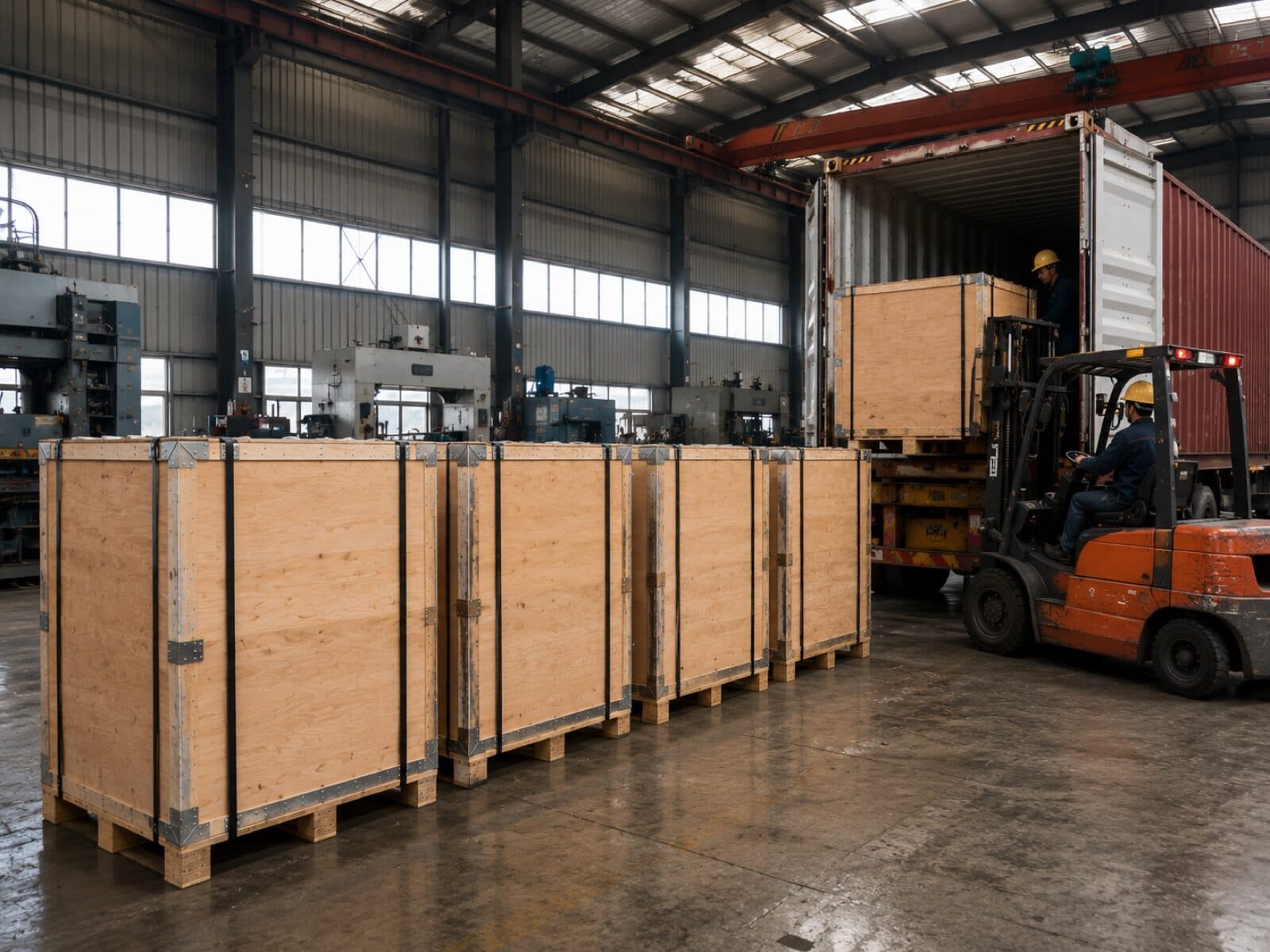
Packaging verification
An industrial machine can travel several thousand kilometres before reaching its user.
The packaging must therefore be suited to sea or land transport.
The inspection verifies:
- the protection of sensitive components;
- the quality of the wooden crates;
- package marking;
- equipment fastening;
- the compliance of shipping documents.
Why is this step so important?
A quality inspection considerably reduces the risks linked to an industrial project.
It notably helps to:
- limit manufacturing defects;
- avoid configuration errors;
- reduce commissioning delays;
- protect the client's investment;
- guarantee compliant receipt of the equipment.
An approach that makes the difference
In industrial projects, quality is not verified only upon receipt of the machine. It is built throughout the process, from manufacturing to shipment.
An inspection carried out before the machine leaves the factory is one of the best guarantees for securing an investment and ensuring the success of an industrial project.